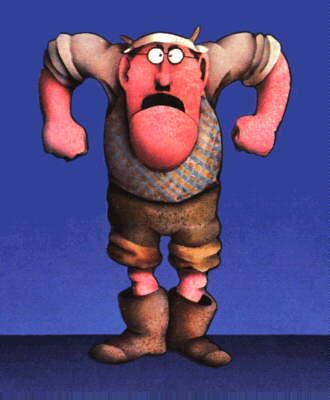
Michael Palin: DOCTOR! DOCTOR! (thrashes desk violently) DOCTOR!
John Cleese: HELLO.
Michael Palin: ARE YOU THE BRAIN SPECIALIST!?
John Cleese: (pause) HELLO.
Michael Palin: ARE YOU THE BRAIIIN SPECIALIST!?
John Cleese: NO. NO, I AM NOT THE BRAIN SPECIALIST, NO. (pause)YES! YES I AM!
Michael Palin: MY BRAIIIN HURTS!
John Cleese: WELL, LETS HAVE A LOOK AT IT MR. GUMBY...
Michael Palin: NO, NO THE BRAIN IN MY HEAD!
John Cleese: HMMMM... (whacks head three times) IT WILL HAVE TO COME OUT!
Seriously, I still feel like Mr. Gumby after the Plato reading.
Here are some of my questions:
1) I'm so confused... I have a general idea of what Socrates is saying about rhetoric, but is there a clear place where he defines it in words a mere mortal can decipher?
2) Is there a particular reason why Gorgias seem so timid in the reading? It seems as though Plato paints all the other characters other than Socrates to extremes, timid or brash, they all seem so inferior to Socrates that I begin to question if Plato is using rhetoric the way Socrates seems to condemn.

I have an answer to your second question only after reading Kevin's question. Kevin reminded us that Plato was a student of Socrates and thus most likely his admirer. Plato is the writer, and as a writer he has control over the characters regardless of any actualities. Whether Plato was aware of it or not, I think he subtly gave Gorgias the dialogue he did based on biases.
ReplyDeleteSome of the consistancies in the character representation could have also been a result of the translator and his preferences as well.
ReplyDeleteI believe he is to be timid on purpose. Also, Socrates continues with reductive reasoning on the assumption of "truths."
ReplyDeleteI also had a really hard time following the long, drawn out metaphors that Socrates used. I felt that he was using a tactic very similar to a prosecutor and the other men who seemed to be "on the stand" didn't elaborate much when they answered his questions. A mere answer of yes or no occurred so often where I think one could say many times yes, but not in all cases...like thirst is quenched when you drink, but once your thirst is gone you can still gain pleasure from drinking...I don't really know what my point is...just that many times the answers to Socrates' pointed questions did seem weak...
ReplyDelete